Does The NBA Have A Rich Kid Problem?
- The modern basketball pipeline is costly, favoring those with resources over raw talent and passion.
For generations, one of basketball’s most powerful selling points was its simplicity. All you really needed was a ball, a rim and enough daylight to get some shots up. That accessibility helped shape the NBA’s mythology: kids from Akron, Chicago, Oakland, Baltimore, Compton, the Bronx, South Central, Flint, Saginaw and everywhere in between turning long odds into life-changing opportunities. Basketball was not just a sport. For many families, it was the way out.
But lately, that story has started to feel different. Fans have joked for years that the league is slowly becoming less about kids “getting it out the mud” and more about kids who grew up with trainers, private gyms, NBA fathers, elite prep schools, EYBL schedules and carefully managed social media rollouts before they ever step foot on a college campus. It is not necessarily an insult. Having resources, stability and support is not a bad thing. In fact, that is what most parents want for their children. Still, the change is noticeable. The backstories do not always sound the same anymore.
That is why Draymond Green’s recent comment hit such a nerve. Speaking on the evolution of youth basketball, Green said he did not even learn how to do a proper individual workout until he got to college. His version of development was simple: find the nearest run, get dropped off and hoop all day. But in his eyes, the game has shifted. “Basketball used to be a poor man’s game,” Green said, arguing that it has now become “a rich kid’s game” because young players increasingly need trainers, resources and access just to keep up.
And when you really look around, it is hard to completely dismiss what he is saying. The modern basketball pipeline is expensive. AAU, travel teams, showcases, private training, strength coaches, nutrition, gear, flights, hotels and recruiting events have turned development into a full-blown industry. A 2024 review on AAU accessibility noted that youth sports have increasingly shifted toward a “pay-to-play” model, creating real financial barriers for kids trying to participate at higher levels. The official AAU membership fee itself may be modest, but that is only the front door. The real cost is everything that comes after it.
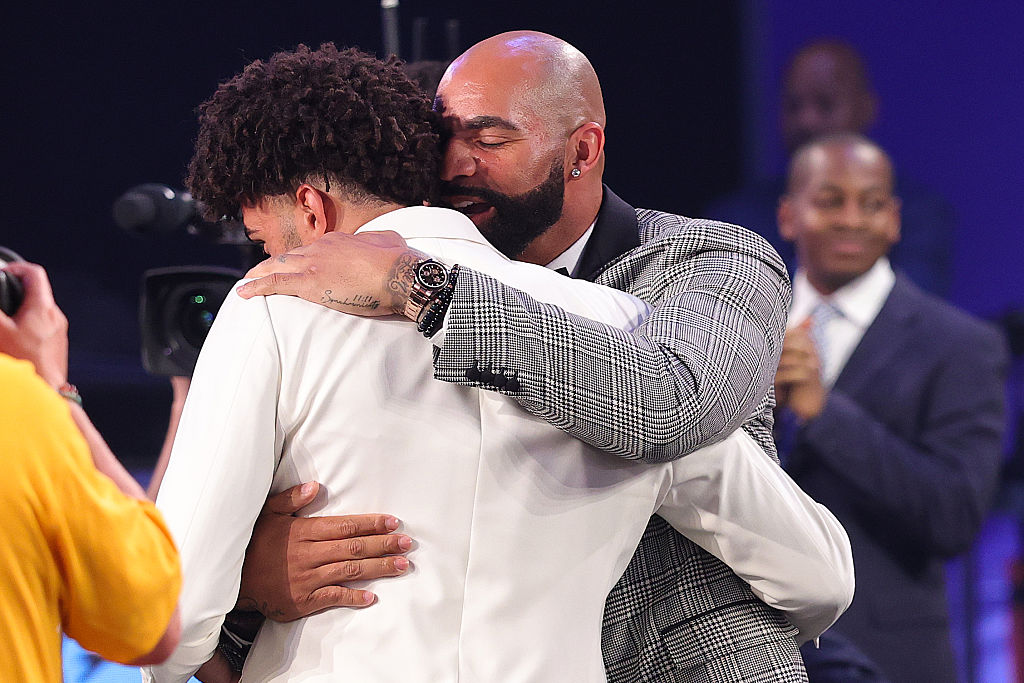
That is why VJ Edgecombe’s draft night moment connected with so many people. When he got emotional talking about his journey, fans could feel the hunger. It was not just another polished prospect smiling in a designer suit. It felt like a reminder of the old basketball dream — the one where talent, pain, sacrifice and belief all meet on the same stage. Edgecombe, who came from the Bahamas before starring at Baylor and becoming a top-three NBA Draft pick, gave people that raw “this changed everything” feeling that fans still love about the draft.
The tricky part is that this conversation can get unfair fast. Nobody should be punished for having parents with money, NBA bloodlines or access to better development. A kid born into comfort can still work hard. A player with a famous last name can still earn their spot. A teenager who had a trainer at 12 can still have passion, pressure and expectations that most people will never understand. The issue is not that rich kids are making it. The issue is whether the system is making it harder for poor kids even to be seen.
That is the bigger question hanging over the NBA. Basketball used to be viewed as one of the most democratic sports in America because the barrier to entry seemed lower than football, baseball, hockey or golf. But now, in a lot of ways, it looks like basketball is catching up to every other sport. Baseball has travel ball. Soccer has elite clubs. Tennis, golf and hockey have always been expensive. Even football, which still has a strong public-school pipeline, has become more tied to private quarterback coaches, 7-on-7 circuits and national camps. The truth is, youth sports across the board have become more professionalized, more specialized and more expensive.
There is also a style-of-play concern underneath Draymond’s argument. He was not just talking about money. He was talking about imagination. Green argued that when every kid is being trained the same way, drilled through the same moves and taught to build the same “bag,” the game can lose some of its natural creativity. That is where the old playground mythology comes back in. Some of the game’s most beloved players developed their feel by playing freely, getting embarrassed, trying things, learning angles and figuring out who they were without somebody scripting every rep.
So, does the NBA have a rich kid problem? Maybe the better answer is that basketball has an access problem. The league is still full of remarkable stories, and poverty should never be romanticized as a requirement for greatness. Nobody should have to struggle to be considered hungry. But if the road to elite basketball now requires thousands of dollars before a kid is even old enough to drive, then the sport has to ask who is being left behind. Because the next great hooper might not have a trainer, a shoe-circuit invite or parents who can afford three weekends of hotels. He might just have a ball, a crowded park and that same old dream basketball was built on.
RELATED: Here Are All The NBA Trades This Offseason So Far
Does The NBA Have A Rich Kid Problem? was originally published on cassiuslife.com